Hardware Set Takeoff from 08 71 00 Specifications
Resolve spec-to-schedule conflicts before pricing to avoid costly submittal delays and field errors.
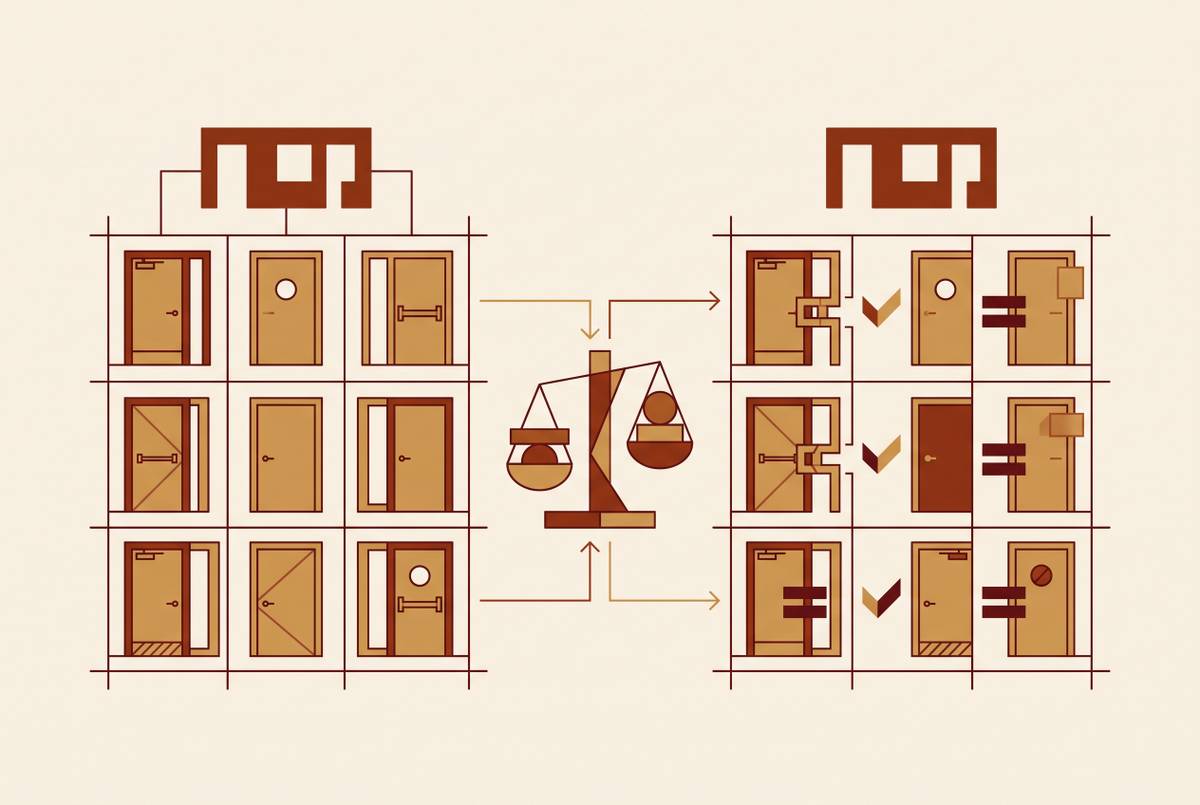
A hardware set takeoff from 08 71 00 fails for one of two reasons: the estimator reads the specification and the door schedule as separate documents instead of one interlocking system, or the estimator prices past a conflict instead of resolving it first. Both mistakes are procedural, not technical, and both are preventable if the takeoff follows a fixed sequence: parse the hardware sets, cross-reference them against the schedule, resolve every conflict, then confirm quantities. Skip a step, or do them out of order, and the miss doesn't surface until submittal review or, worse, until the doors are hung.
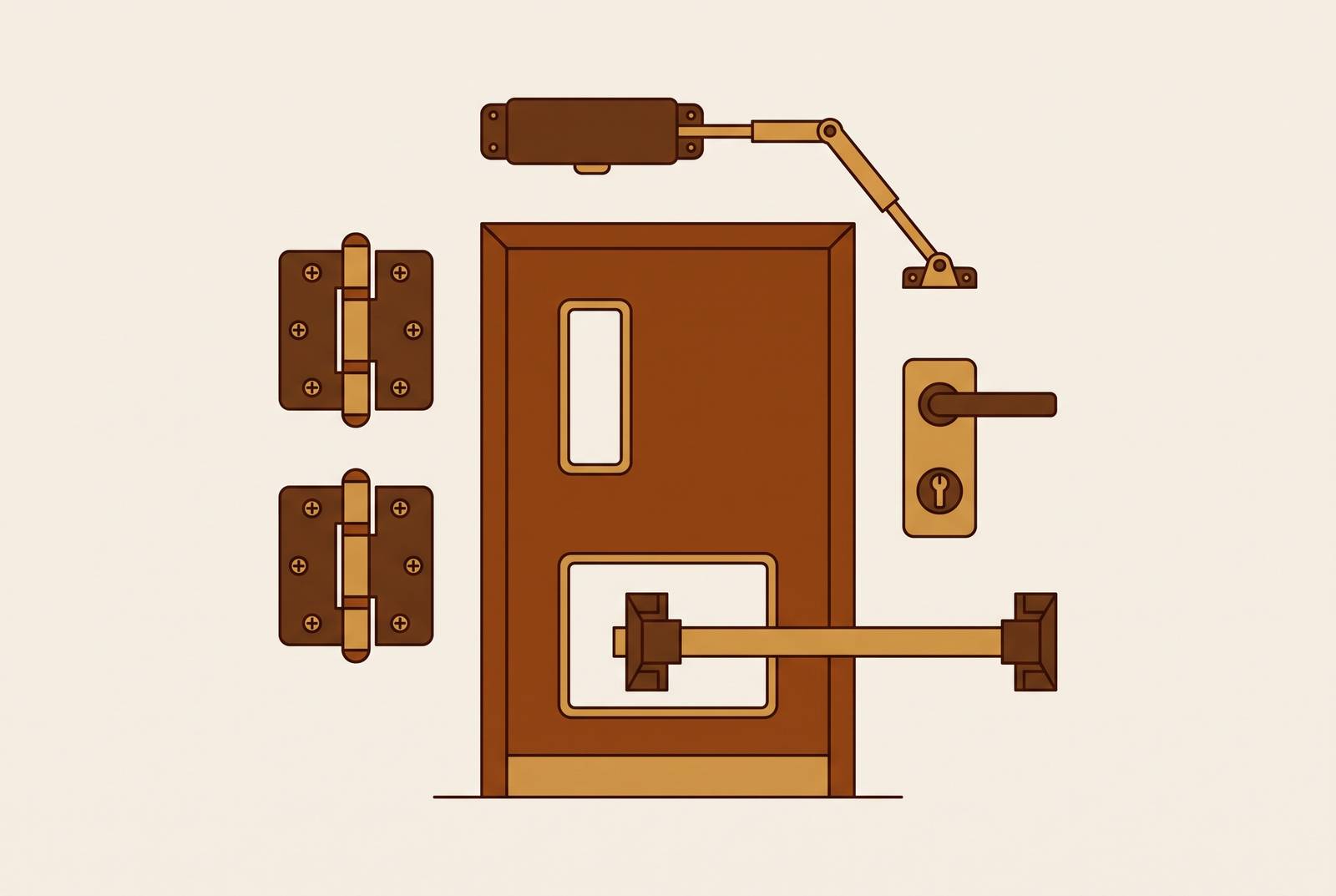
08 71 00 is the CSI MasterFormat section covering finish hardware under Division 8, Openings: hinges, locksets, closers, exit devices, and the accessories that rarely get mentioned until someone notices the doors don't have stops. It is a contractual document, not a suggestion, and what it lists is what must be supplied; any deviation runs through a formal submittal and approval process. Within the section, hardware is organized into numbered sets: HW-1, HW-2, HW-3, and so on, each naming a brand, model, function code, and finish for every component on a given opening.
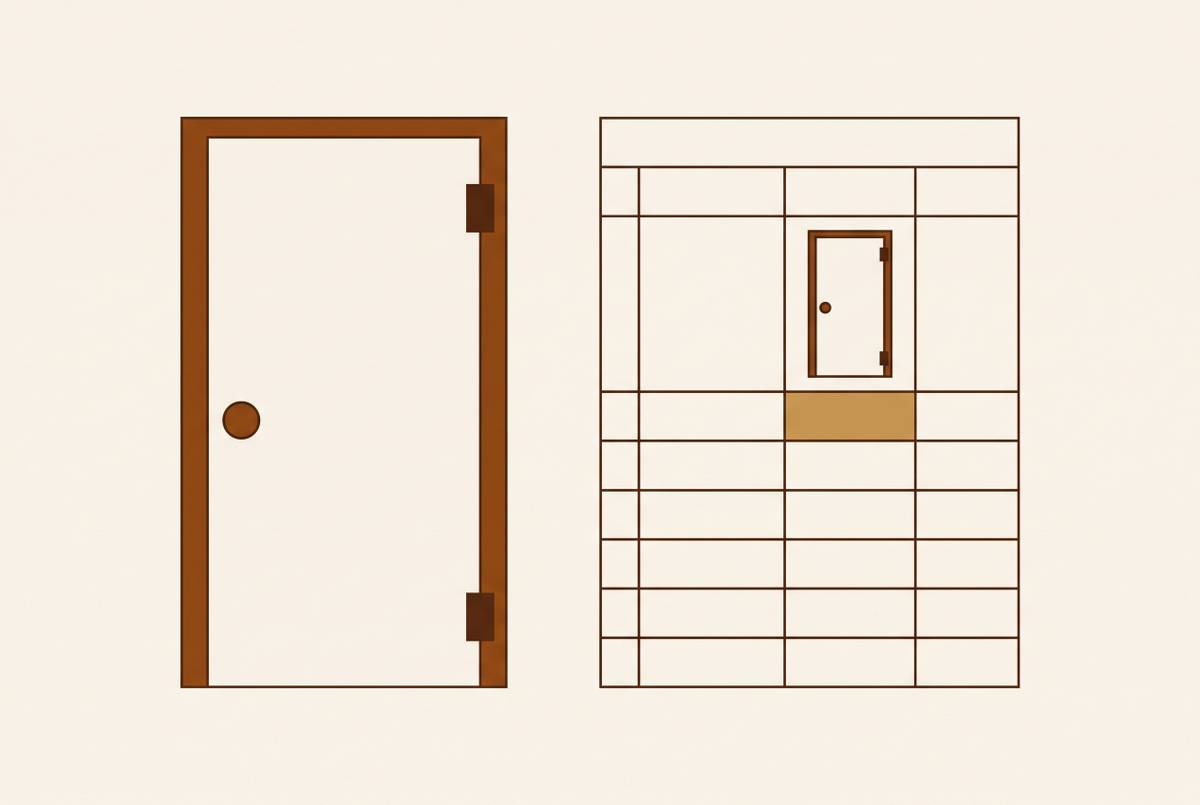
That's distinct from what the door schedule does. The schedule assigns a hardware set number to each opening; the spec defines what's actually in that set, and neither works without the other. A schedule without the spec is an address with no map to get there, while a spec without the schedule is a catalog with no instructions on where anything gets deployed. On a mid-size commercial project (three to five floors), the hardware takeoff routinely spans 180 to 400 or more individual openings, each with its own fire rating, frame type, hardware set, and ADA requirement layered on top. Whoever wrote the spec matters too: an architect drafting it in isolation produces a different document, in terms of completeness and internal consistency, than a certified Architectural Hardware Consultant would.
The three documents a hardware takeoff reads simultaneously (and what breaks when you don't)
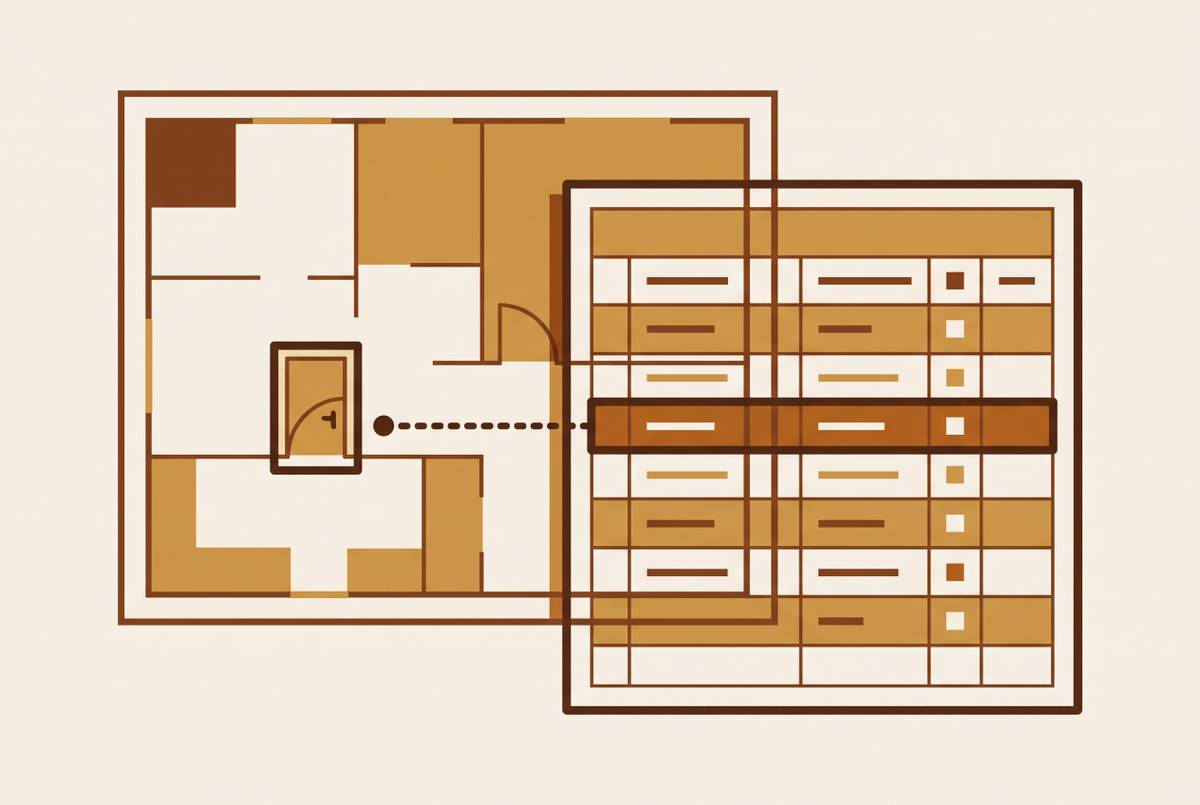
No single document carries enough information to price hardware correctly. Floor plans show where each opening sits and carry the door tag, something like D-101, while the door schedule translates that tag into the opening's attributes: size, material, fire rating, swing direction, and the hardware set number assigned to it. The 08 71 00 spec then translates that set number into an actual list of purchasable products. Break the chain anywhere (tag to schedule row to hardware set to line item) and there's a gap the estimator has to close before pricing means anything.
Reading these three documents in sequence, rather than in parallel, is where mismatches slip through. An opening might be confirmed in the schedule with a hardware set number that the spec never defines, or a spec set might call for electrified components that the electrical scope has already handed to a separate contractor, unnoticed because nobody checked the two documents against each other at the same time.
There's a smaller, more mechanical trap buried in the schedule itself: door size shorthand. Schedules commonly compress dimensions into a four-digit code, first two digits for width, last two for height, and misreading that notation is a source of ordering errors on commercial jobs. It's the kind of error that looks like a typo until the door shows up three inches too narrow for the frame.
Step one: parsing each hardware set in the specification
Start with the spec, not the schedule, not the plans, and read every hardware set group in 08 71 00 before touching a door count. For each set, record every product category present: hinge, closer, lockset, exit device, coordinator, threshold, whatever's listed. Note the specified manufacturer and model number, the function code, the finish designation, and the quantity per leaf. A function code isn't a formality; it governs how the latch and lock interact and whether the opening satisfies life-safety or access-control requirements. Get the function code wrong and the opening might not fail inspection so much as fail to do what it's there to do.
Flag electrified hardware the moment it appears: card readers, electric strikes, power transfers, door position switches. These items carry wiring scope and access-control coordination with them, and if a component is marked "by others," it needs to stay out of the hardware contract entirely. Ordering it anyway isn't redundancy, it's a coordination error that produces duplicate procurement and an argument with the access-control contractor later.
Watch for "similar to Set X" language. Similar means different, and the estimator's job is to find exactly where before assigning any quantity. Grade requirements matter here too. Most commercial specs call for Grade 1 hardware under ANSI/BHMA standards; Grade 1 cylindrical locks and lever sets are tested to 800,000 cycles under ANSI/BHMA performance testing. BHMA certification is technically voluntary, but it shows up as a hard requirement in nearly every architectural spec worth reading closely.
The output of this step is a clean, annotated list of every hardware set with all attributes recorded. Everything downstream depends on this list being right.
Step two: cross-referencing hardware sets against opening identifiers in the door schedule
With the annotated set list built, move to the schedule and work it row by row. Record the opening identifier, size, material, fire rating, and swing for each entry, then match its assigned hardware set number back to the list from step one. Tally how many openings share each set number, since that tally is the quantity multiplier for every product inside that set.
Cross-check the count against the floor plans. Schedules and plans diverge more often than anyone would like, particularly after addenda get issued, and the two need to agree before anything gets priced. The plan is the geometric record, and the schedule is the specification record; both are supposed to describe the same building, so when they don't, someone missed an update.
Flag three things during this pass: opening tags on the plan with no matching schedule row, schedule rows with no hardware set assigned at all, and hardware set numbers in the schedule that don't correspond to anything in 08 71 00. That last one shows up often enough on projects where the spec and schedule got revised independently, mid-project, by different people who weren't talking to each other. A blank hardware field in the schedule doesn't mean no hardware is needed; it means the scope is unresolved, and unresolved scope has a way of becoming a field decision, which is another way of saying a change order.
Handedness matters too. A left-hand reverse bevel opening and a right-hand opening assigned to the same hardware set may still need handed components (exit devices, closers, certain levers), so confirm handing before locking in quantities.
Step three: resolving conflicts between the spec and the schedule before pricing anything
Conflicts between the schedule and the spec aren't the exception on a well-run project; they're routine, and treating them as routine is what keeps them from becoming expensive. There are a few recurring categories worth naming directly.
A hardware set mismatch happens when the schedule assigns, say, HW-4 to an opening but the spec only defines sets one through three. That needs an RFI or an addendum before a number gets attached to it. A fire-rating conflict shows up when a 90-minute rated opening gets assigned a hardware set that doesn't specify listed hardware for that rating; check the model against its UL listing, and if the spec is silent on the rating requirement, the spec is incomplete and the architect needs to close that gap, not the estimator. A finish conflict (schedule says one finish, spec says another) is a cost driver, not a rounding error; don't average it and don't guess. And a revision mismatch, where the schedule and spec are simply at different version dates, is cheap to catch before a bid goes out and expensive to discover after.
"Or equal" doesn't apply everywhere. Fire-rated openings, life-safety devices, and anything specified by name have hard limits that "or equal" language doesn't reach around. ADA conflicts deserve the same treatment: a hardware set on an accessible route that requires tight grasping, pinching, or twisting is non-compliant no matter what the spec says about it, and that gets flagged regardless of who wrote the document.
Log every conflict with the opening identifier, the nature of the discrepancy, and the document version it came from. Resolution runs through the architect or the AHC, not through the estimator's best guess. The cost of an RFI is always lower than the cost of a change order built on an assumption that turned out wrong.
Step four: confirming quantities and building the line-item count
Once conflicts are resolved, the confirmed opening count from step two becomes the multiplier for every hardware set. Expand each set into individual product lines. Hinges get priced per leaf, and a three-hinge door is not the same as a leaf-and-a-half; price it as three units, or per the manufacturer's packaging convention, but don't round it into some fraction that doesn't correspond to an actual box. Locksets and exit devices are typically one per leaf unless the set specifically calls for pairs or multi-point locking. Closers need their arm type confirmed (standard, parallel, or top jamb), since arm type changes pricing and gets skipped constantly on a casual read of the set.
Accessories are where quantities go missing most often: stops, silencers, thresholds, gasketing. They sit at the bottom of the hardware set list and don't register as "hardware" the way a lockset does, so they get undercounted with some regularity.
Keying is its own document, separate from 08 71 00, but it has to be coordinated against the hardware takeoff, not treated as an afterthought. Key quantity, masterkeying hierarchy, and construction keying all carry cost, and all three get missed by a hardware-only read of the spec. At this stage, double back on anything marked "by others" in step one and confirm none of it snuck into the final count.
Compile the results by product, grouped by manufacturer and model across every set. That's the form a distributor or manufacturer's rep needs to quote the job, and it's also where volume shows up that might shift pricing tiers. Last check: the total door count in the takeoff should reconcile against the total opening count from the schedule and the plans. If it doesn't, something got missed earlier in the sequence, and it's worth finding before the bid goes out rather than after.
Where institutional and owner-standard specs change the process
Owner-standard specifications are a different animal from a project-specific architectural spec. Universities, healthcare systems, transit authorities, and government agencies maintain their own 08 71 00 master specs that lock in approved manufacturers and model lines across every project they run, not just the one in front of the estimator. Some universities publish standards that lock in approved manufacturers and model lines with no substitution allowed for key hardware categories. There's no selecting from a field of options; the estimator's job is confirming compliance with a list that's already been decided.
Owner standards commonly call for institutional-grade hardware meeting specific ANSI/BHMA grades, from explicitly named manufacturers. Pricing a product that meets every technical requirement but isn't on that approved list still gets rejected at submittal, because the requirement isn't performance; it's the name on the product.
Before parsing hardware sets in step one, confirm whether an owner standard governs the project. If it does, set parsing includes a compliance check against that owner's approved product list, on top of the project spec itself. Projects with hardware budgets above roughly $75,000 to $100,000, or those involving hospitals, justice facilities, education campuses, or government buildings with layered security zoning, tend to bring in an AHC as a matter of course. When an AHC authored the hardware schedule, that document carries real weight with the Authority Having Jurisdiction, and conflict resolution in step three often routes directly to that consultant rather than back to the architect.
Federal work adds another layer entirely. Federal work introduces coordination requirements that extend beyond the project spec itself, including applicable life-safety and accessibility standards. The takeoff sequence doesn't change, but the conflict-resolution checklist gets longer. Electrified and access-control hardware on institutional jobs tends to specify fail-secure versus fail-safe by function, not leave it to product selection; misreading an EU designation as an EL designation, or the reverse, is a substitution error even when the physical hardware model itself is approved.
What an accurate hardware set takeoff actually prevents
None of this is thoroughness for its own sake. Every step in the sequence closes off a specific failure mode, and each failure mode has a name that shows up later in the project: a change order, a submittal rejection, a punch-list item nobody can explain.
Missing a "by others" notation produces duplicate procurement and a scope argument with the access-control contractor. An unresolved revision mismatch means pricing a hardware set that's already been superseded, which is how a winning bid turns into a losing one on reorder. A fire-rating gap gets caught at submittal by the AHJ, or worse, gets caught in the field as a substitution that voids the door assembly's listing. Undercounted accessories show up as threshold and gasketing shortfalls that stall the punch list right at the end. An unreconciled gap between the plan and the schedule means missing doors in the count, and on a project running 180 to 400-plus openings, that's not a rounding error; that's real unpriced scope.
The sequence (parse the sets, cross-reference the identifiers, resolve the conflicts, confirm the quantities) isn't arbitrary ordering. Each step catches something the previous step exposed but couldn't fix on its own. And speed matters as much as accuracy here: an estimator who can run this sequence quickly across several bid packages in the same window can quote more work, and the real constraint on most Division 8 bidding operations isn't willingness to bid, it's time to take off. Software built specifically to read Division 8 documents (schedule, plans, and spec together rather than one after another) compresses that timeline without cutting out the reconciliation steps themselves. The sequence stays the same, and what disappears is the manual bottleneck.