Addendum and RFI Impact on Division 8 Document Sets
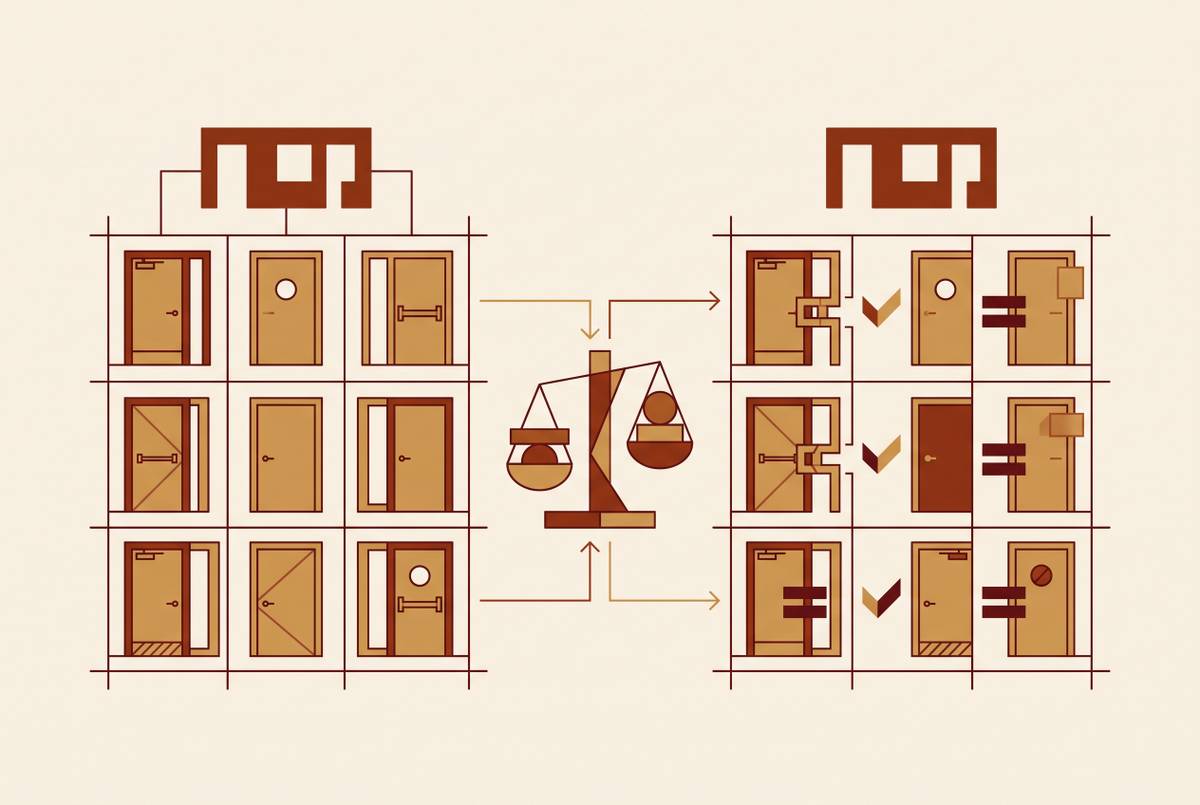
Addenda silently invalidate door counts and hardware schedules across multiple documents.
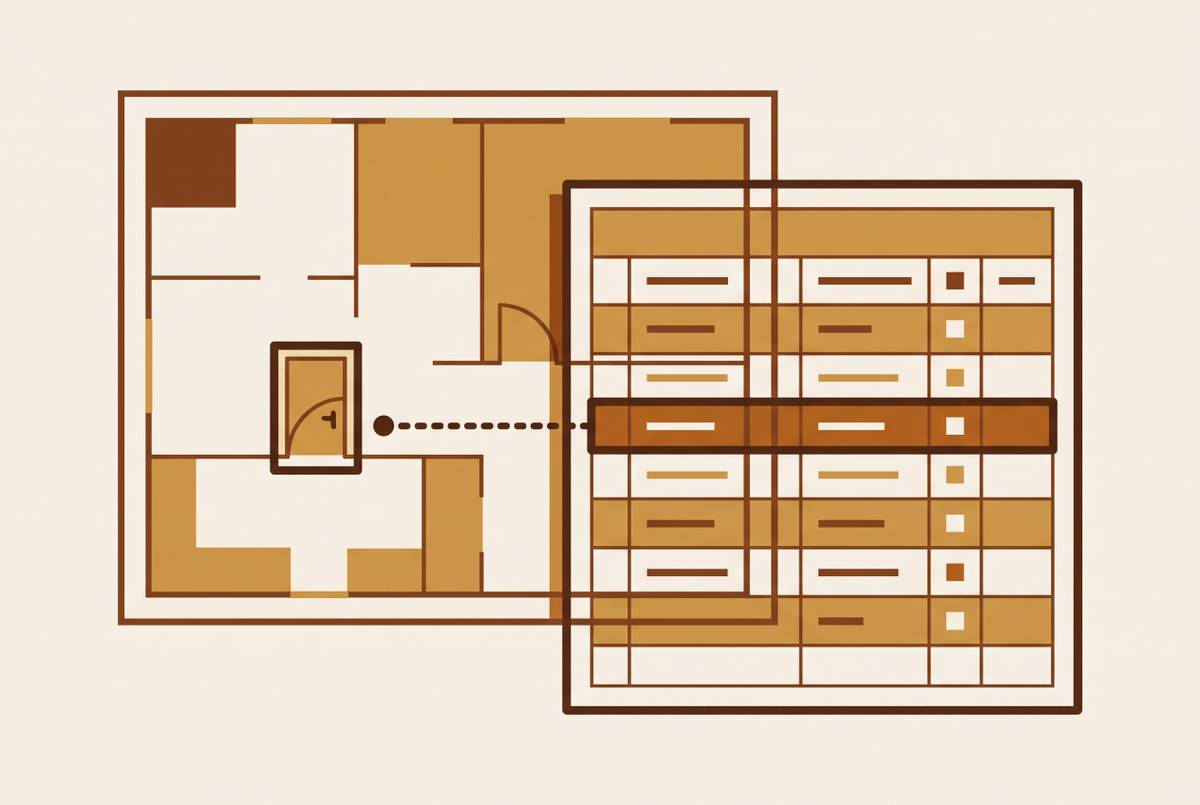
Division 8 estimating is a matching problem disguised as a takeoff problem. Every opening in a door schedule has to reconcile against a hardware schedule, a spec section, and a set of elevations, and addenda break that reconciliation constantly, often invisibly. A single addendum touching one hardware set can quietly invalidate the door count, the finish schedule, and the frame details on three separate documents, and an estimator who updates only the document that got the revision cloud is pricing a bid that no longer matches itself.
What addenda are, their legal weight, and when they arrive
An addendum is a formal, written change to the bid documents issued before the contract gets signed. That timing detail matters more than it looks: pre-award changes are addenda, post-award changes are something else entirely, and the distinction determines who's responsible for pricing what.
Under AIA A701, an addendum is a formal instrument issued prior to contract execution that becomes part of the bid documents and, eventually, part of the contract. It carries the same legal standing as the original drawings and specs. There's no gray zone here, no informal-versus-formal distinction to hide behind.
A701 also specifies that addenda should arrive no later than four days before bid receipt. In practice, that deadline gets treated as a suggestion. Late addenda land inside that window routinely, sometimes on the final day or two before bids are due, and Division 8 hardware revisions are frequent offenders.
Bidders typically have to acknowledge every addendum formally, in writing, on the bid form itself. Miss that acknowledgment and a bid can be disqualified on a technicality, no matter how accurate the pricing that it carries turns out to be. But acknowledging an addendum and incorporating it into the takeoff are two completely different acts, and treating them as the same step is where a lot of estimating errors start.
Division 8 addenda tend to come from three sources. Design teams answer bidder RFIs through addenda rather than answering one contractor privately, so every bidder prices identical scope. Addenda correct errors already sitting in the original set, things like a missing hardware set or a spec section that contradicts the drawings. And addenda carry late hardware revisions driven by owner value-engineering or last-minute product substitutions.
Addenda happen before the bid, while Architect's Supplemental Instructions happen after. Both modify the documents. Only one of them lands inside the estimating window.
How RFIs generate addenda and signal where the document set is fragile
An RFI is a formal written question from contractor to design team, and the answer becomes part of the project record. A verbal answer from an architect on a job-site call means nothing contractually, no matter how confident it sounded.
During bidding, RFIs are the mechanism that forces ambiguity into view. The owner collects the questions, and the answers go out to everyone through an addendum, so no single bidder ends up pricing a different scope than the field. That's the whole point of the addendum as a delivery vehicle: it keeps the bid apples-to-apples.
Industry research on large construction projects has found that RFI response times can average close to ten days, that a significant share of RFIs turn out to be unjustifiable with the answer already existing somewhere in the contract documents, and that the cumulative cost of unnecessary RFIs on large projects can run into six figures. Larger projects tend to generate hundreds of RFIs; even a comparatively modest project averages around ten.
Those numbers matter beyond the abstract cost. A cluster of hardware-related RFIs on a given project is a signal, not noise: it usually means the spec and the schedule don't line up. RFIs asking about finish codes or manufacturer approvals point to a spec section that's internally inconsistent or leaning on undefined proprietary codes. RFIs about fire ratings or frame types tend to expose conflicts between the door schedule and the elevations that nobody caught in review.
An RFI filed by one competitor and answered through an addendum changes the documents for everyone, whether or not a given estimator saw the addendum land in the inbox. Miss it, and the bid submitted is quietly pricing a different project than the rest of the field.
How a single addendum can simultaneously invalidate the schedule, the spec, and the plans
The dependency between these documents runs in both directions, and a change to one almost always forces an update somewhere else, often in more than one place at once.
Hardware set revisions do the most damage. A change to a set in Section 087100 requires checking every door the schedule assigns to that set number; on many projects, a single set governs a dozen or more openings. If the revised set swaps a cylindrical lockset for a mortise lockset, the door prep requirement changes with it, and the schedule needs updating to match, or the doors arrive from the factory prepped wrong. If the new hardware changes physical dimensions, a wider closer arm, a deeper exit device projection, the clearances shown on the elevations can go stale without anyone touching the elevation sheet. If a single set governs a dozen or more openings and the addendum revises that set, every one of those openings needs repricing. Not one line item. All of them.
Door schedule revisions ripple the other way. A door added by addendum needs a hardware set assigned to it; if the addendum adds the opening but the schedule doesn't get updated, the set is undefined, and that gap has to get RFI'd before it can be priced honestly. A fire rating change on a scheduled door touches the hardware (some hardware simply isn't listed for rated assemblies), the frame spec, and possibly the glazing allowance on the elevation, all from one line changing on a schedule. A door removed by addendum should remove its hardware set from the estimate too; forgetting to pull that line is a quiet, common source of overcounting.
Finish code changes look minor and rarely are. One published 233-line hardware spec carried 83 items with no finish designation at all. When an addendum assigns finish codes to previously unfinished items, the estimator has to work out which line items just became live cost. A shift from a standard finish like US26D to a proprietary coating can move an item from stock to special order, with a lead time that didn't exist in the base bid.
The "similar to Set 3" language compounds all of this. That phrasing already meant the estimator had to go find the differences between the referenced set and the actual door in question. Once an addendum revises Set 3 itself, those differences are pointing at a target that just moved, and the original comparison is worthless until someone resolves it again.
Revision clouds help, but only on the sheet they're drawn on. A hardware change buried in the project manual carries no visual flag anywhere on the door schedule drawing. Following the clouds alone will miss it every time.
Where in the estimating timeline addenda do the most damage
Addenda issued early, shortly after the bid goes out to the street, do the least harm. Counts aren't locked yet, so the changes fold into the takeoff before anything is committed.
Mid-process addenda are where things start to hurt. Some hardware sets have already been priced, some doors already counted, and now the estimator has to audit what's finished against what the addendum just made wrong. That audit takes time nobody budgeted for.
Late addenda, arriving inside the four-day A701 window or on the last day or two before bids close, do the most damage by far. Hardware sets can change forty-eight hours before bid day, and that is not a hypothetical. It is a named, recurring pressure point in Division 8 estimating. On a project carrying 80 or more unique hardware sets, each requiring its own pricing, even a handful of late revisions means repricing several line items against a clock that isn't moving in the estimator's favor. Worse, there's no time left to file an RFI and get a real answer back. A typical RFI response cycle doesn't fit inside the final days of a bid window, so the estimator is pricing on a judgment call instead of a clarified answer.
Lead time turns a missed addendum into a schedule problem, not just a pricing one. Custom frames, specialty glazing, and electrified hardware routinely run 8 to 14 weeks. A late hardware change that swaps a stocked item for a custom one, missed during estimating, doesn't just cost money later. It costs the schedule.
And acknowledgment isn't incorporation. A contractor can check the box confirming receipt of an addendum and still never touch the takeoff. Both steps have to happen, and they're not the same step wearing two hats.
The specific Division 8 document conflicts that addenda most commonly fail to resolve cleanly
Spec-schedule misalignment is the conflict that occurs most often and resolves least cleanly. Three published Section 087100 specifications from three separate owners illustrate the range: one listed 40 hardware sets, one listed 23 sets with no finish designations attached to any of them, and one listed no hardware sets whatsoever, leaving the bidder to build them from scratch. An addendum that revises the spec doesn't reliably update the schedule to match, and vice versa.
Finish codes carry their own quiet inconsistency. US32D is the traditional national designation for a finish; 630 is the BHMA numeric code for that same finish family. Proprietary manufacturer codes often appear in the spec undefined entirely. When an addendum adds finish requirements to items that previously had none, the codes it uses may require cross-referencing against material outside the document set just to confirm what's being specified.
Hardware prep is a persistent coordination gap. The hardware set says what goes on the door; the schedule and the submittal have to confirm the door was actually prepped to receive it. An addendum that swaps a cylindrical lockset for a mortise lockset changes the prep requirement, and if the schedule doesn't get updated in step, the mismatch stays hidden until installation, well past the point where it's cheap to fix.
Doors that appear on the plans but not in the schedule are a known risk even before addenda enter the picture; best practice is to count from the plan and log the discrepancy as an assumption. Addenda make this worse, not better; a door added to the schedule doesn't automatically appear on the floor plan, and the reverse happens just as often. Both directions need checking after every addendum, not just one.
Cross-division gaps deserve particular attention. An addendum revising an electrified hardware spec in Division 26 may never generate a matching addendum in Division 8, even though the scope overlaps directly. The estimator has to watch adjacent divisions on their own initiative; nothing in the Division 8 document set will flag the change automatically.
And "similar to" references, already a soft spot before any addendum arrives, become genuinely indefinite once the base set they reference gets revised. The differences the estimator once had to track down now apply against a target that no longer exists in its original form.
What a disciplined addendum tracking protocol looks like for a Division 8 estimator
One person or one system should own the addendum log, full stop. Sequentially numbered, time-stamped, with a column marking Division 8 relevance and a separate column tracking whether it's actually been incorporated into the takeoff, not just acknowledged.
Every addendum needs to get checked against all four document layers at once, not one after another. Does it change a hardware set? Then check which doors that set governs in the schedule. Does it add or remove an opening? Then confirm the hardware set assignment and the floor plan both reflect it. Does it touch a finish code or manufacturer approval? Then trace which sets and items are downstream of that change. Does it change a fire rating? Then hardware compatibility, frame spec, and glazing allowance all need a look, not just one of the three.
Revision clouds help, but they're incomplete by design. They flag what changed on a given sheet and nothing beyond it, so a hardware change buried in the project manual won't appear as a cloud anywhere near the door schedule. Cross-document auditing can't be replaced by following the clouds around the page.
The assumption log is the estimator's actual insurance policy here. Every unresolved question an addendum creates, a hardware set added without a finish code, a door added without an assigned set, a "similar to" reference now pointing at a revised set, belongs in writing, documented as an assumption, and carried into the bid letter as a formal clarification. When an addendum lands too late to file an RFI and get a real answer back, that log becomes the record of what got priced and why. It's the difference between a defensible bid and an exposed one, and the distinction only matters after the fact, when it's too late to fix.
A second-reviewer count check should run after every addendum gets incorporated, not just once at the end. If the schedule showed 247 doors before the addendum, any additions or removals the addendum makes must produce a verifiable new total before the bid goes out the door, not an assumed one.
And acknowledgment stays separate from incorporation, always. One is a contractual requirement. The other is an estimating requirement. Neither one covers for the other.
How AI-assisted takeoff changes the addendum response problem
The core difficulty in tracking addenda is identical to the core difficulty in the original takeoff: several documents need to be read together, and a change in one has to be traced through all the others before the numbers mean anything. Manual, sheet-by-sheet review tends to fail at exactly this task once the clock is running out, because tracing a single hardware set revision across a 300-door schedule by hand, under a 48-hour deadline, is exactly the kind of work that invites the overcounts and missed line items described above.
AI-assisted Division 8 takeoff tools built to read door schedules, hardware schedules, spec sections, and floor plans together, rather than as four separate documents, can re-run that same cross-document reconciliation against a revised set faster than a manual pass allows. That speed doesn't replace judgment. It buys back the time judgment actually needs when an addendum lands two days before bid day and every hardware set on the job just became a question again.