Authoring Hardware Sets Against Institutional Owner Standards
Institutional hardware standards override project specs and must be sourced before pricing.
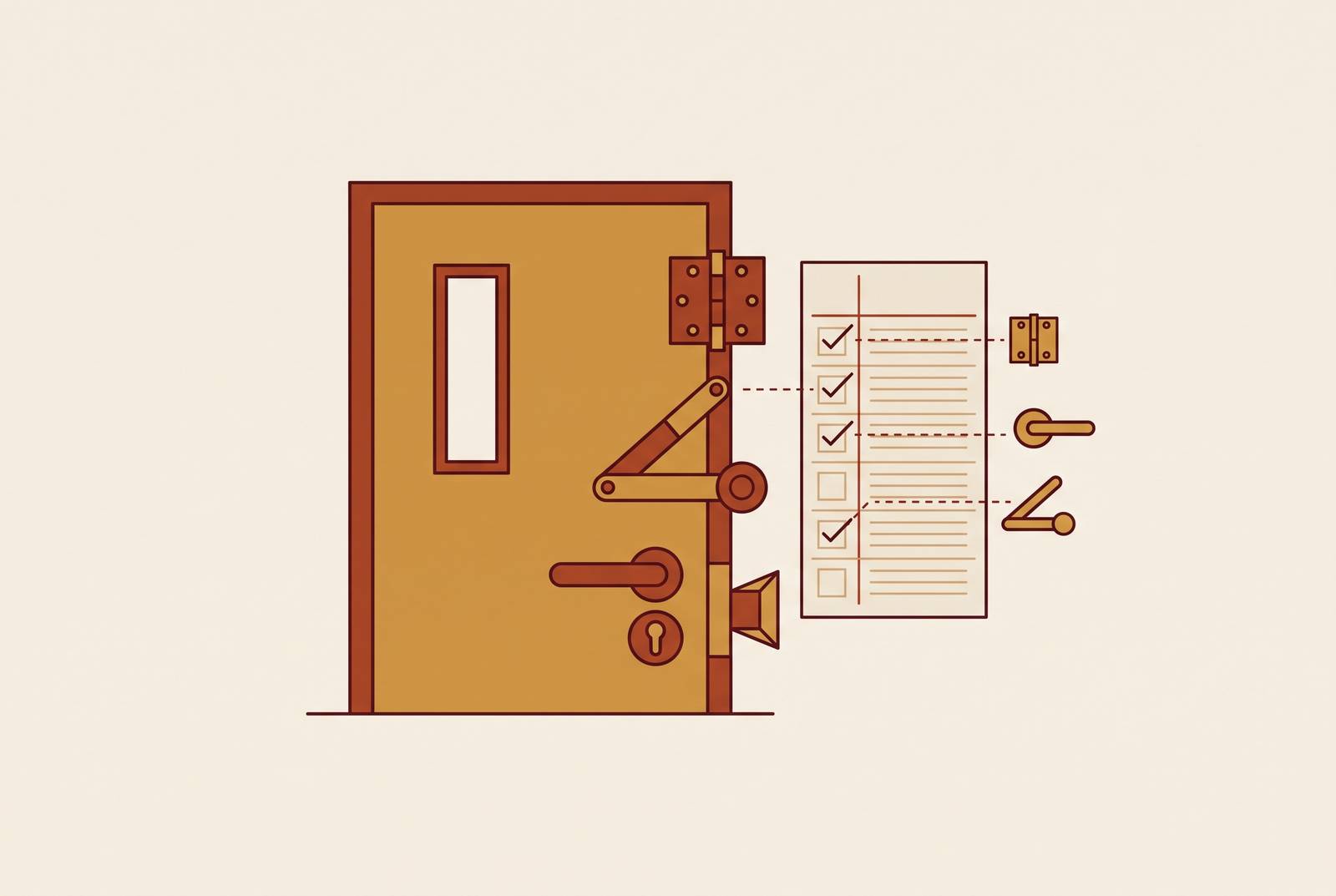
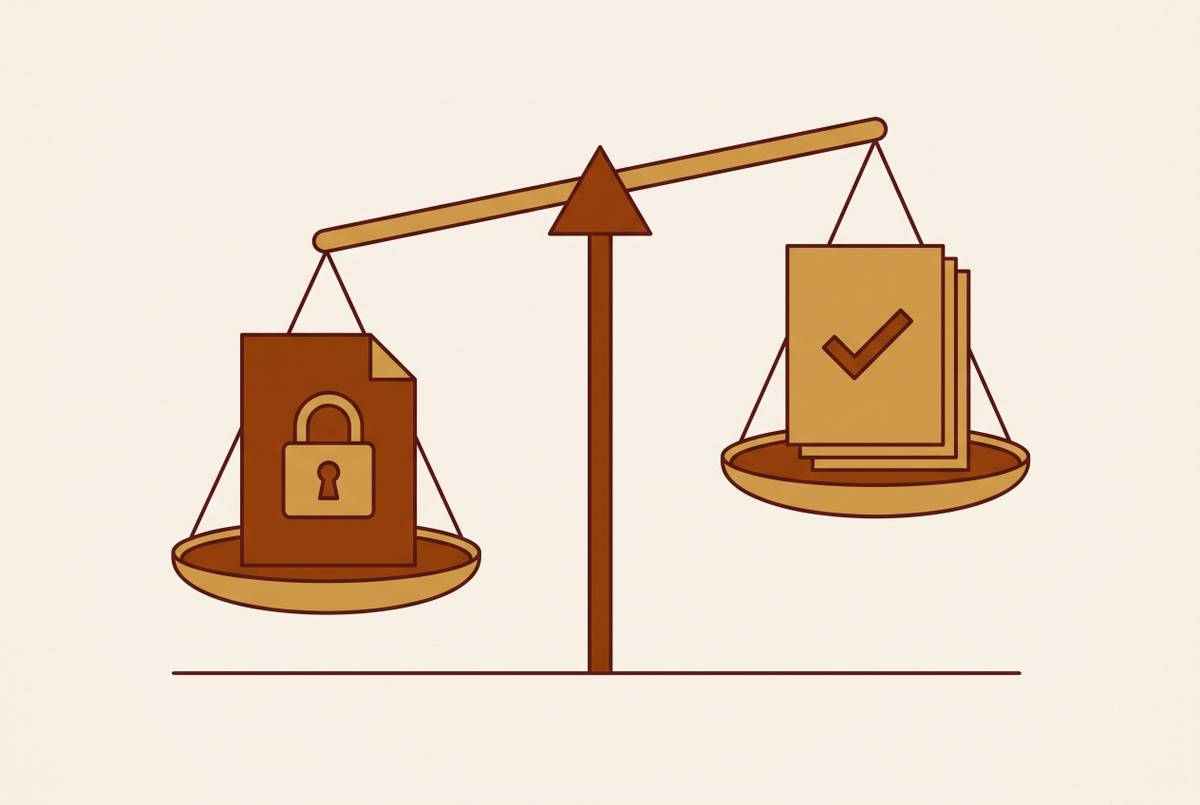
On a standard commercial job, the estimator reads the 087100 spec, matches hardware sets to the door schedule, and prices what's there. The document in hand is the final word, and the job is extraction: pull the hardware set, match it to the opening, move to the next line. Institutional work breaks that model at its foundation. The project spec may reference a standing owner standard, defer to it in part, or be superseded by it outright, and that standard is a separate document the estimator has to track down and read on its own terms. Authoring a hardware set on an institutional job means authoring against a policy that lives outside the bid documents, not transcribing what's printed inside them. Get this inversion wrong on a campus that has sole-sourced its cylinder manufacturer, and the hardware set built from the project spec alone will be priced wrong, submitted wrong, and rejected at submittal, with no way back that doesn't cost real money and real time.
What owner standards are and where they come from
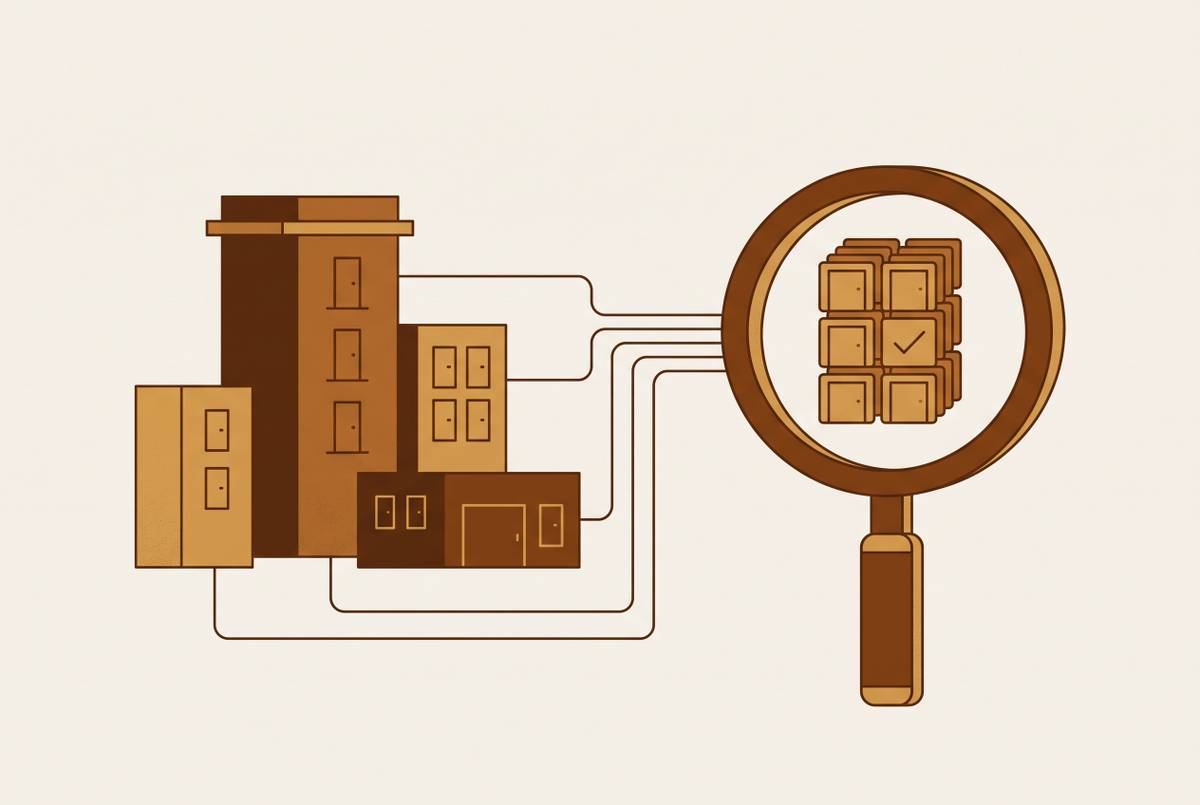
Owner standards are standing, institution-wide hardware policies, developed independently of any single project, that set which manufacturers, products, and keying systems are allowed across a campus or a hospital system's entire building portfolio. They come from the owner's facilities management operation rather than from the project architect or the hardware consultant who writes the spec. A university, a hospital system, or a government agency maintains these standards because keying systems have to work together across hundreds of buildings, maintenance crews need a predictable parts inventory, and life-cycle cost has to stay under control at a scale no single project can see. The hardware consultant who drafts the 087100 section for a given job is usually incorporating or deferring to that standard, which makes the project spec a downstream expression of the owner's decision rather than its source.
Three published examples show how differently institutions write this down. That sequence bounds the contractor's scope explicitly. University of Georgia's Athens Campus standard similarly grants sole-source approval for Best Access Systems cylinders and cores, requires that Best Access Systems ship directly to the UGA FMD Key Shop for keying to be finalized there, and requires that UGA itself install the permanent cores. Johns Hopkins University takes a similar sole-source approach with a different manufacturer: locks, latches, and cylinders must be Best Access Systems, the 45H Best mortise lock is the preferred unit, the Best lever covers any cylindrical lock applications, cylinders must accept a 7-pin interchangeable core in small format, lever handles and thumb turns must meet ADA standards, and electromagnetic door holders are required on fire-rated assemblies and in corridors. The University of Southern California's Health Sciences Campus names a third configuration again: the Yale 8800FL CRR is the campus standard lockset for HSC, and the campus standard mortise locks are BHMA Grade 1 heavy-duty units from the Command Access ML05 series.
These three examples share a pattern that outweighs any individual brand name. Each names a specific manufacturer and model series with no substitution path, each reflects the owner's existing keying infrastructure and maintenance reality rather than a simple product preference, and each creates obligations that appear in full only outside the project spec itself.
How the project spec and owner standards conflict
The project spec and the owner standard come from different authors writing at different times, and they can say different things about the same opening. An estimator who doesn't know which one controls will build the wrong set before the first line item is even priced. The conflicts tend to repeat in a small number of shapes. A project spec might list two or three approved manufacturers for a lockset while the owner standard names exactly one. The apparent flexibility in the bid documents doesn't actually exist on that campus. A spec might describe a hardware function, a lever lock for an office door, without naming a model, while the owner standard prescribes an exact model series for that function in that facility type. Or a spec might call for a standard commercial closer where the owner standard requires institutional-grade hardware rated for a far higher cycle count, because the facility's documented traffic load demands it.
The rule that governs all of these cases is the same: where the spec names a product as an owner standard, substitution is a procurement constraint to be followed, not a bid preference to be negotiated. Substitution analysis, determining whether a proposed alternate genuinely meets the institutional finish, function, and warranty requirement, stays human work. No software resolves it automatically, because the judgment depends on reading the owner's intent, not just matching a spec sheet. The practical consequence for authoring is straightforward: the owner standard has to be in hand before authoring starts, not pulled out after a conflict surfaces at submittal, by which point the bid has already been priced against the wrong set.
How cycle-life and code requirements shape the owner standard
Institutional hardware specs are calibrated to documented traffic loads, life-safety codes, and maintenance realities that a standard commercial spec never has to account for. Cycle-life math explains a large part of why institutional-grade hardware costs what it costs. Commercial-grade hardware is typically rated for hundreds of thousands of cycles, while heavy-duty institutional hardware is rated for significantly more, often a million cycles or beyond. In a hospital with a busy corridor door cycling heavily each day, even one-million-cycle hardware reaches the end of its useful life in under three years. The owner standard that specifies that hardware is pricing in the replacement labor and the maintenance burden that a lighter-duty commercial unit would create on that same door, not chasing a premium brand name.
Code requirements layer on top of that cycle math. Healthcare and education corridors frequently need smoke-rated assemblies under NFPA 105, and doors that serve as smoke barriers between smoke compartments must either close on their own or close automatically on smoke detection. Operating rooms add a further constraint: doors need hands-free operation, usually a power operator triggered by an elbow-height push plate or a touchless wave sensor set at an accessible height, because scrubbed surgical staff can't touch hardware with their hands. ADA operability requirements under ANSI A117.1 set hard numbers that apply across almost every institutional opening: a maximum opening force of 5 lbf on interior non-fire doors, a minimum clear width with a wider dimension preferred, and no hardware that requires tight grasping, pinching, or twisting of the wrist to operate; lever handles and push-pull mechanisms are the standard compliant choice. The authoring task is to satisfy the owner standard, the applicable life-safety codes, and ADA simultaneously: a set that passes one filter but fails another is still a wrong set.
What the authoring process looks like when owner standards govern
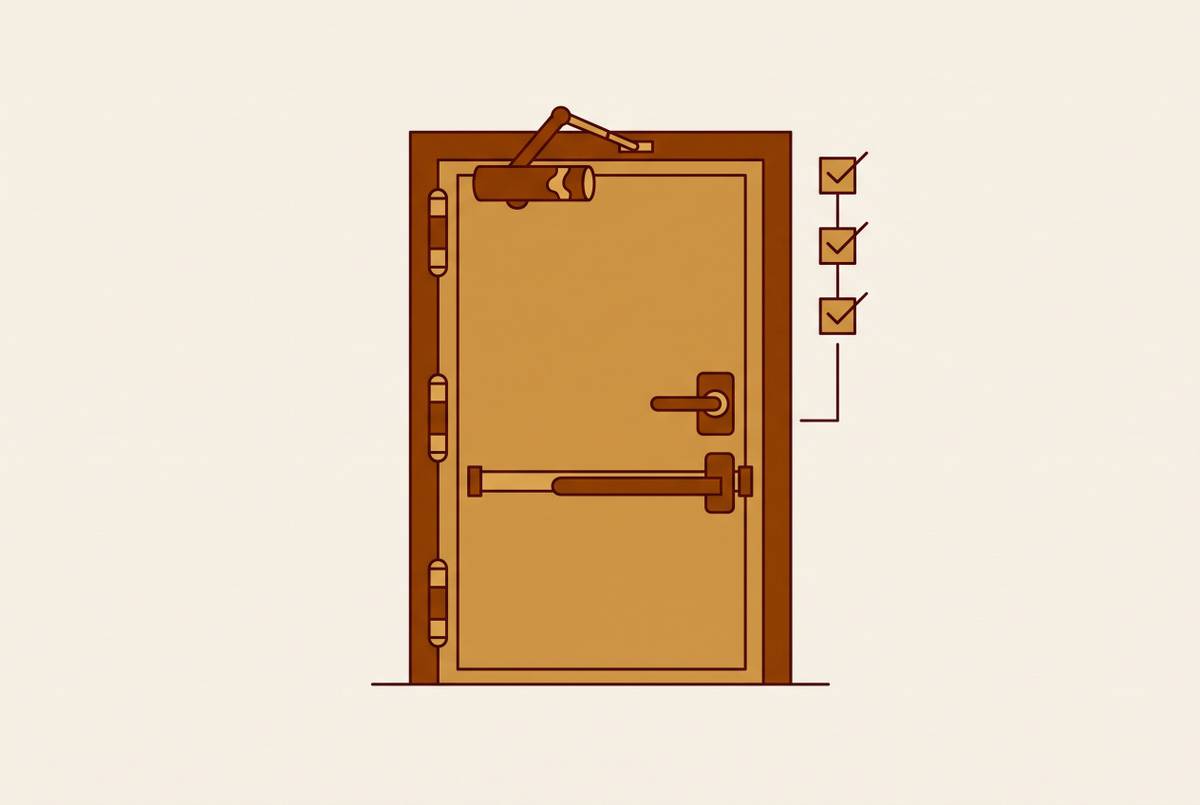
Authoring hardware sets against owner standards is a reconciliation process. The project spec, the door schedule, and the owner standard all have to be held at the same time, with conflicts resolved before a single set goes into the pricing file. The sequence that keeps this disciplined starts with obtaining the owner standard before even opening the project spec, treating it as the primary reference from the first hour of the job rather than a document consulted only when something looks off. From there, the door schedule gets sorted by function, location, fire rating, accessibility requirement, security level, and traffic volume, because these are the exact variables the owner standard uses to prescribe hardware in the first place, and they have to be identified before any set can be assigned.
For each opening type, the owner standard's prescribed manufacturer, model series, and function code get mapped directly against whatever the project spec calls for, with every conflict noted explicitly rather than assumed away. Where the owner standard locks in a sole-source manufacturer, any spec line listing a different manufacturer has to be flagged and resolved on its own, never treated as an equivalent substitute. Electrified hardware needs its own separate pass entirely: power supply amperage and voltage, access control integration points, and coordination notes that connect to the electrical and low-voltage divisions all have to be carried into the hardware set, and these details are the ones most likely to get under-carried on a fast-moving bid.
One structural question creates risk at this stage before a single price gets entered: whether quantities on a hardware set are stated per opening or per set. The City of Santa Fe's published specification for Fire Station No. 2, Section 087100, states outright that listed quantities apply to each pair of doors or to each single door, and that convention has to be confirmed on every institutional spec rather than assumed from habit. Get that backwards on a large project and every downstream number is off by a multiple, with nothing visibly broken, because the figures stay internally consistent even while they're wrong.
The finish and scope exclusion pass gets skipped often and matters every time it is. On the Santa Fe Fire Station No. 2 specification, the finish code "EN" appears on many lines but gets decoded in a separate article of the spec, not inside the hardware set itself, so an estimator reading only the set invents a finish instead of pricing the one actually specified. Lines coded "OT," for other trade, mean the item sits outside the door hardware contractor's scope, and missing that exclusion means carrying cost that belongs to somebody else's bid. Ten of the live sets on that document hand off lines this way. Lines with no finish stated at all are a price the estimator is simply making up, and on that specification's 233-line schedule, a large share of the lines carry no finish at all.
None of this clears pricing without a second reviewer checking the work. Counts need to be sanity-checked against schedule totals, because doors assigned to two sets at once, or assigned to a set captioned "NOT IN USE," are real errors that appear in published institutional documents, and the Santa Fe specification carried both.
Where the spec structure itself creates authoring risk
Institutional specifications share a section number, 087100, and almost nothing else about how they're built, as three public standards illustrate the range. An estimator who expects one consistent format will misread a document organized on entirely different lines, and the range among institutions is wide. The Santa Fe Fire Station No. 2 spec runs multiple headers, numerous live hardware sets, and hundreds of line items, with doors already assigned to sets and finishes stated on most lines: the owner has assembled the set and handed it over, errors and all. Cornell University's specification publishes 23 sets with no finishes anywhere in them, zero US finish codes and zero BHMA numerics, every hinge line across every set reading identically as "3 Hinge As Required MK," six proximity reader lines that specify model numbers obtainable only by phone, and eight power supply lines that give neither amperage nor voltage, leaving nearly a quarter of all line items with nothing in them an estimator can price. Michigan State University publishes no sets at all. Its 13-page section organizes everything by component type across lettered tables, Part 1 General running A through M, so the estimator has to match a usage row and repeat that exercise nine separate times for every single opening.
Each format demands a different response. On the Santa Fe document, the job is to read the set as given, flag its errors, and resolve its contradictions directly, including the four doors assigned to two sets at once and the nine doors assigned to a set marked "NOT IN USE". On the Cornell document, the estimator has to build the sets from scratch, because the spec supplies components rather than assembled sets, and has to make phone calls just to get priceable numbers for the proximity readers. On the Michigan State document, every set has to be constructed by reading the component table and applying it opening by opening, a format that rewards a systematic process and punishes anyone who tries to shortcut it with assumptions. A skilled estimator can read any of these formats correctly. The real requirement is recognizing which type of document is in hand before pricing starts, not after the numbers are already wrong.
Why standard commercial takeoff tools fall short
General-purpose takeoff platforms are built to detect openings and count them quickly. On standard commercial sets, current AI takeoff tools do well at detecting openings, extracting the door schedule, and mapping each opening to its assigned hardware set quickly. Current AI takeoff tools can extract a door schedule and the hardware sets embedded in plans and specs, mapping each opening to its assigned set with real speed. What none of them do is interpret an owner standard that lives in a separate document from the one being scanned, recognize a sole-source constraint the project spec never fully states, or reconcile a conflict between what the spec permits and what the institution actually allows. That work depends on reading two documents against each other and understanding which one governs, a judgment call that sits outside what pattern-matching across a single PDF can resolve. The authoring discipline this article has walked through, getting the owner standard first, sorting openings by the variables that drive it, checking quantity conventions, decoding finishes and exclusions, and running a second pass before pricing, stays a human exercise. On institutional jobs, that discipline is the job itself.